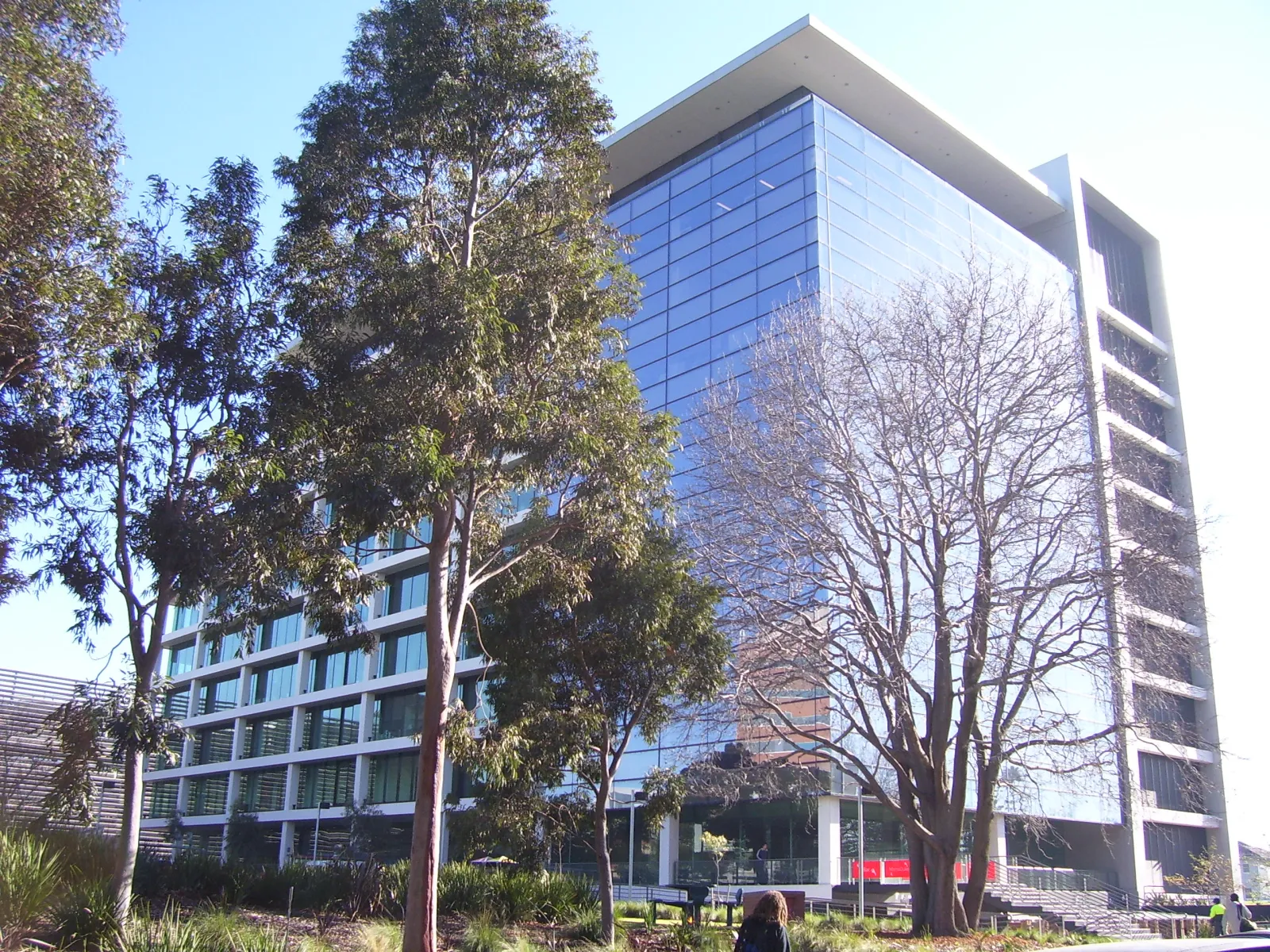

Monash University
Melbourne, Victoria, Australia · Established 1958
Official website ↗Total Students
86,000
Intl. Students
40%
Setting
Suburban
Overview
Founded in 1958 and named after Australian general and engineer Sir John Monash, Monash University is one of Australia's largest universities by enrolment, with its main Clayton campus in outer Melbourne supplemented by other Australian campuses (Caulfield, Peninsula, Parkville) and international campuses in Malaysia and Indonesia -- giving Monash a genuinely global footprint that few of its Australian peers match. Monash is a member of Australia's Group of Eight (Go8) research-intensive universities and, unlike Oxford or Cambridge's collegiate model, operates as a single institution where students belong directly to a Faculty rather than a separate residential college, though on-campus and affiliated accommodation is available, particularly for first-year students. Monash is particularly well known for Pharmacy and Pharmaceutical Sciences (consistently ranked among the world's best), Business and Management (Monash Business School holds triple accreditation), Medicine, Engineering, Law, and Education, and it runs one of Australia's largest and most research-active Faculties of Pharmacy. The university has produced multiple heads of government, including Australia's first female Prime Minister, and its Monash Institute of Medical Research and affiliated hospital partnerships give its Medicine, Pharmacy, and Health Sciences programs unusually direct access to major Melbourne teaching hospitals. For prospective IELTS or TOEFL candidates, Monash applies a standard entry threshold to most programs -- IELTS Academic 6.5 overall with no band below 6.0, or TOEFL iBT 79 overall with no section below 19 -- but a meaningfully higher threshold applies to specific programs: the Bachelor of Education requires IELTS 7.5 overall, and the Doctor of Medicine (MD) requires IELTS 7.5 overall with no band below 7.0. International applicants apply directly to Monash (not through a UK-style centralised UCAS system) and are assessed against Monash's own published country-specific equivalency tables for their home secondary or tertiary qualification.
Rankings
Times Higher Education (THE) World University Rankings · Overall (Global)
#58 (2026)
US News Best Global Universities · Overall (Global)
#38 (2027)
Admissions, Requirements & Costs
Requirements, deadlines, and test-score cutoffs differ significantly between undergraduate and graduate/Master's programs — shown separately below.
Undergraduate
Application Fee
$90
Documents required: Direct online application via Monash's myApp portal (no centralised UCAS/Common App-style portal), Certified copies of secondary school transcripts/certificates, English language proficiency test scores (unless exempt), Certified passport copy, Personal statement or portfolio for a small number of programs (e.g. Design, Music, some Fine Arts pathways)
| Term | Deadline | Type |
|---|---|---|
| Semester 1 (March) | 31 December of the preceding year for most programs (e.g. 31 December 2026 for Semester 1, 2027 entry); competitive programs such as Medicine have earlier, program-specific deadlines | Rolling |
| Semester 2 (July) | Mid-year intake available for many programs; check program-specific deadlines | Rolling |
Test Scores
IELTS Minimum
6.5 (Gabble rec. 6.5)
TOEFL Minimum
79 (4 new scale) · Gabble rec. 79 (4 new scale)
PTE Minimum
58
IELTS notes: Standard undergraduate requirement: 6.5 overall with no band below 6.0 in Listening, Reading, Writing, and Speaking. Notably higher requirements apply to specific programs: Bachelor of Education requires 7.5 overall, and the Doctor of Medicine (MD, a graduate-entry program taken after an undergraduate degree) requires 7.5 overall with no band below 7.0. Only IELTS Academic is accepted; IELTS General Training does not satisfy Monash's academic entry requirement.
TOEFL notes: Standard requirement: 79 overall with no section below 19 (Reading, Listening, Speaking, Writing). Programs requiring the higher IELTS 7.5 tier (Education, Medicine) require a correspondingly higher TOEFL score, generally in the mid-90s to 100 overall with elevated section minimums -- confirm the exact figure on the specific course's English-requirements page.
TOEFL scores shown as: legacy 0–120 scale (new 1.0–6.0 CEFR-aligned scale, effective Jan 2026).
Accepted tests: IELTS Academic, TOEFL iBT, Pearson Test of English (PTE) Academic, Cambridge English C1 Advanced / C2 Proficiency, TOEFL Essentials
Waiver: Applicants who have completed the equivalent of at least one year of full-time study taught and assessed in English within a recognised period, or who are citizens of and were schooled in a small number of recognised English-majority countries, may be exempt from providing a separate test score -- confirmed via Monash's English Language Requirements policy rather than a simple nationality-only rule.
Conditional admission: Monash College and Monash University English Language Centre (MUELC) offer English-bridging and foundation pathways for applicants who narrowly miss the required score, allowing a preparatory English program to lead into the degree; availability and the exact score gap this can bridge vary by course and should be confirmed directly with Monash admissions.
Tuition (Intl.)
$32,400
Living Expenses/yr
$27,000
Total Cost of Attendance
$59,400
Scholarships
Monash International Merit Scholarship
Reported at AUD 10,000-15,000 per year for the duration of the degree (exact current value should be confirmed on Monash's scholarship page, as it has changed in recent years)
Monash's flagship, no-separate-application undergraduate international scholarship, automatically considered for eligible new international students who receive an offer.
Eligibility: Automatic consideration for international students who receive an undergraduate course offer from Monash and meet the academic merit bar; no separate scholarship application required
Monash Faculty and country-specific scholarships
Varies considerably by award; typically a partial tuition contribution
A rotating set of Faculty-administered and donor-funded scholarships tied to specific countries, regions, or subjects, searchable through Monash's central scholarships database.
Eligibility: Varies by scholarship; most require an offer of admission and a separate scholarship application
Popular Programs
Gabble Prep Insights
Where applicants lose points: Writing tends to sit closest to the per-band floor for applicants meeting Monash's standard 6.5/6.0 requirement, though applicants targeting Education or the graduate-entry Doctor of Medicine face a considerably higher, more evenly balanced threshold (7.5 overall, with Medicine requiring no band below 7.0) that demands stronger performance across all four skills.
Most applicants to Monash's standard-tier programs (the large majority, including Commerce, Engineering, Science, and Arts) report Reading and Listening as the most comfortable sections, with Writing the one most likely to sit close to the 6.0 floor; applicants aiming for Education or Medicine should budget meaningfully more preparation time given the considerably higher and more evenly balanced score required.
Figures above were converted from AUD at approximately 1 AUD = 0.72 USD (September 2026 spot rate). Monash does not publish one flat international tuition figure -- fees are set per course and published on individual course pages, with widely cited ranges spanning roughly AUD 35,000-55,000/year for most undergraduate programs (Business/Commerce-adjacent programs sit in this band). The figure used here, AUD 45,000 (~USD 32,400), is a representative mid-range estimate rather than an official single figure -- always check the specific course page for the exact published fee. Living costs were estimated from Monash's own official guidance of roughly AUD 30,000-45,000/year for a single international student, midpoint used (~AUD 37,500, ~USD 27,000); this excludes course fees, textbooks, and discretionary spending. Monash does not publish one official aggregate acceptance rate, and third-party estimates online (commonly cited around 40%) are not sourced from an official Monash publication, so this dataset leaves acceptanceRate null rather than publish an unverified figure. The application fee is AUD 125 (~USD 90).
Recommended prep timeline: 8 weeks
Graduate (Master's & PhD)
Application Fee
$90
Documents required: Direct online application via Monash's myApp portal, Official transcripts from all previously attended institutions, Statement of purpose (program-dependent), CV/resume, Academic and/or professional references (program-dependent), English language proficiency test scores (unless exempt), Research proposal for PhD and other research-degree applicants
| Term | Deadline | Type |
|---|---|---|
| Semester 1 (March) | 31 December of the preceding year for most taught coursework programs; PhD/research applications are accepted year-round on a rolling basis, subject to supervisor and funding availability | Rolling |
| Semester 2 (July) | Mid-year intake available for many coursework programs; check program-specific deadlines | Rolling |
Test Scores
IELTS Minimum
6.5 (Gabble rec. 6.5)
TOEFL Minimum
79 (4 new scale) · Gabble rec. 79 (4 new scale)
PTE Minimum
58
IELTS notes: Standard postgraduate coursework requirement: 6.5 overall with no band below 6.0, similar to the undergraduate standard tier. The graduate-entry Doctor of Medicine (MD) requires a considerably higher 7.5 overall with no band below 7.0, and Education-related master's programs generally follow the same elevated tier as undergraduate Education.
TOEFL notes: Standard requirement: 79 overall with no section below 19, matching the undergraduate standard tier. Programs requiring the higher IELTS 7.5 tier require a correspondingly higher TOEFL score, generally around 100 overall with elevated section minimums -- confirm on the specific course's English-requirements page.
TOEFL scores shown as: legacy 0–120 scale (new 1.0–6.0 CEFR-aligned scale, effective Jan 2026).
Accepted tests: IELTS Academic, TOEFL iBT, Pearson Test of English (PTE) Academic, Cambridge English C1 Advanced / C2 Proficiency, TOEFL Essentials
Waiver: Applicants who have completed the equivalent of at least one year of full-time study taught and assessed in English within a recognised period, or who are citizens of and were schooled in a small number of recognised English-majority countries, may be exempt -- confirmed via Monash's English Language Requirements policy.
Conditional admission: Monash University English Language Centre (MUELC) offers pre-sessional English pathways for postgraduate offer-holders who narrowly miss the required score; availability and the exact score gap this can bridge vary by program and should be confirmed directly with Monash admissions.
Tuition (Intl.)
$32,400
Living Expenses/yr
$27,000
Total Cost of Attendance
$59,400
Scholarships
Monash Graduate Excellence Scholarship
Varies by award; typically a partial tuition-fee reduction for the duration of the degree
A merit-based scholarship for high-achieving international postgraduate coursework applicants, awarded on academic merit at the time of admission.
Eligibility: Considered automatically for eligible international postgraduate applicants meeting the academic merit bar; confirm current eligibility criteria and value directly with Monash, as scholarship terms are periodically updated
Faculty and country-specific graduate scholarships
Varies considerably by award; from partial tuition contributions up to more substantial awards for the most competitive schemes
A rotating set of Faculty-administered and donor-funded scholarships tied to specific countries, regions, or subjects, searchable through Monash's central scholarships database.
Eligibility: Varies by scholarship; most require an offer of admission and a separate scholarship application
Popular Programs
Gabble Prep Insights
Where applicants lose points: Writing carries particular weight for Monash Business School's MBA and other research-oriented master's programs, where a structured statement of purpose and case-study- or research-based coursework demand sustained academic argument beyond conversational English.
Applicants to the standard 6.5/6.0 tier generally clear Reading and Listening comfortably, with Writing the section most likely to sit close to the per-band floor. Applicants to the graduate-entry Doctor of Medicine (7.5 overall, no band below 7.0) should treat their preparation timeline as considerably longer than the standard-tier figure below, given the higher and more evenly balanced score required.
Figures above were converted from AUD at approximately 1 AUD = 0.72 USD (September 2026 spot rate). Monash does not publish one flat postgraduate tuition figure; fees are set per course, and the AUD 45,000 (~USD 32,400) figure used here is a representative mid-range estimate for a typical taught master's program rather than an official single figure -- Monash's MBA and Medicine-adjacent programs are priced considerably higher; always check the specific course page. Living costs use the same official Monash cost-of-living estimate as the undergraduate figure. Monash does not publish one official aggregate postgraduate acceptance rate, so that field is left null. GRE/GMAT: this dataset found no evidence of a standard university-wide GRE/GMAT requirement for Monash Business School's MBA or other graduate programs at the time of writing (many Australian MBA programs substitute a minimum years-of-work-experience requirement instead) -- always confirm current policy directly with the specific program, since requirements can change.
Recommended prep timeline: 8 weeks
Programs Offered
Bachelor of Commerce
Undergraduate · 3 yr
Bachelor of Pharmacy (Honours)
Undergraduate · 4 yr
Bachelor of Engineering (Honours)
Undergraduate · 4 yr
Bachelor of Laws (combined degrees)
Undergraduate · 5 yr
Bachelor of Science
Undergraduate · 3 yr
Master of Business Administration (MBA)
Masters · 1 yr
Master of Pharmacy
Masters · 2 yr
Doctor of Medicine (MD, graduate-entry)
Masters · 4 yr
Master of Data Science
Masters · 2 yr
PhD
PhD · 4 yr
Campus Life
Monash's main Clayton campus in outer Melbourne is Australia's largest university campus by enrolment, complemented by the Caulfield, Peninsula, and Parkville campuses in Melbourne and additional Monash campuses in Malaysia and Indonesia -- giving Monash students the option to study part of their degree overseas at an affiliated Monash campus. On-campus and Monash-affiliated accommodation is available, particularly for first-year students, though (unlike Oxford or Cambridge) this is standard university housing rather than a separate residential college system. The Monash Student Association and Monash Postgraduate Association run orientation, clubs, and student advocacy across the university's Australian campuses, and Lot's Wife has served as Monash's independent student publication for decades. Given Monash's large international student body (around 40% of the total cohort), the university supports an unusually wide range of country- and region-specific cultural societies alongside its academic, sporting, and hobby clubs.
Notable clubs: Monash Student Association (MSA) and Monash Postgraduate Association (MPA), Lot's Wife, Monash's long-running independent student magazine, Monash Sport, running a large number of university sports clubs across multiple campuses, A wide range of Faculty-based and cultural student societies, reflecting Monash's large international student body, Monash Association of Debaters and numerous country- and region-specific societies
Outcomes
Undergraduate
Graduate
Notable Alumni
Julia Gillard — 27th Prime Minister of Australia, and the country's first female Prime Minister; earned a Bachelor of Arts and Bachelor of Laws at Monash
Peter Costello — Australia's longest-serving Federal Treasurer (1996-2007); earned a law degree at Monash
Alan Finkel — Neuroscientist, engineer, and entrepreneur; served as Australia's Chief Scientist (2016-2020); Monash graduate
Nick Cave — Musician and ARIA Hall of Fame inductee, known as frontman of Nick Cave and the Bad Seeds; attended Monash's Caulfield campus (then Caulfield Institute of Technology)
Visa Interview Prep
Australia's Student visa process centres on the Confirmation of Enrolment (CoE) that Monash issues once a firm offer is accepted and the required deposit or first-instalment tuition payment is made -- a CoE is required before a Subclass 500 application can be lodged. Applicants must also satisfy the Genuine Student requirement, demonstrating genuine study intent, and show evidence of sufficient funds to cover tuition, travel, and living costs at the Department of Home Affairs' published annual living-cost threshold. International students must also hold Overseas Student Health Cover (OSHC) for the duration of their visa. The Australian Government has periodically adjusted visa processing priorities and financial-capacity thresholds; applicants should confirm current requirements on the Department of Home Affairs website close to their intended application date.
- Australia's Subclass 500 Student visa is assessed primarily from the online application, supporting financial and academic documents, and a written 'Genuine Student' (GS) statement -- there is no standard in-person interview requirement built into the process the way the US F-1 visa has
- The Department of Home Affairs may request additional information, documents, or in specific risk-based cases a follow-up interview, but this is the exception rather than the standard path
FAQs
What IELTS score do I need to apply to Monash as an undergraduate?Undergrad
Most Monash undergraduate programs require a minimum overall IELTS Academic score of 6.5, with no band below 6.0. The Bachelor of Education is a notable exception, requiring 7.5 overall, and the graduate-entry Doctor of Medicine requires an even higher 7.5 overall with no band below 7.0.
Does Monash use UCAS or the Common Application?
No. Monash is not part of the UK's UCAS system or the US Common Application -- international applicants apply directly through Monash's own myApp online portal, and admission is assessed against Monash's published country-specific equivalency tables for the applicant's home secondary or tertiary qualification.
Will I need to attend a visa interview to study at Monash?
Almost certainly not. Australia's Subclass 500 Student visa is generally assessed from the online application, supporting documents, and a short written 'Genuine Student' statement rather than a routine in-person interview, unlike the US F-1 visa. The Department of Home Affairs can request further information or, rarely, an interview in specific cases.
Does Monash require the SAT, ACT, or a specific GPA for international applicants?Undergrad
No. Monash does not use the SAT, ACT, or a single university-wide GPA for international admissions. Applicants are assessed against Monash's own published equivalency requirements for their specific home-country secondary or tertiary qualification.
Is the GRE or GMAT required for Monash graduate programmes?Grad
No standard Monash graduate program, including the MBA, was found to require a GRE or GMAT score at the time of writing -- many Australian MBA programs substitute a minimum years-of-work-experience requirement instead. Always confirm current policy directly with the specific program.
Can I get a waiver for the IELTS/TOEFL requirement at Monash?
Yes, in certain cases. You may be exempt if you've completed at least one year of full-time study taught and assessed entirely in English within a recognised period, or if you're a citizen of and were schooled in a recognised English-majority country -- confirmed against Monash's English Language Requirements policy.
How competitive is Monash for international applicants?
Monash does not publish one official aggregate acceptance rate, and third-party estimates online (commonly cited around 40%) are not sourced from an official Monash publication, so this dataset does not cite a specific figure. Admission is assessed program-by-program against Monash's published country-specific equivalency requirements.
How many weeks should I spend preparing for IELTS or TOEFL before applying to Monash?
Given Monash's moderate standard requirement (IELTS 6.5/TOEFL 79), a realistic window is around 8 weeks of focused preparation for most programs, with more time recommended for applicants targeting the considerably higher Education or Medicine thresholds (IELTS 7.5).