
Massachusetts Institute of Technology
Cambridge, Massachusetts, United States · Established 1861
Official website ↗Total Students
11,816
Intl. Students
29%
Student:Faculty
3:1
Setting
Urban
Overview
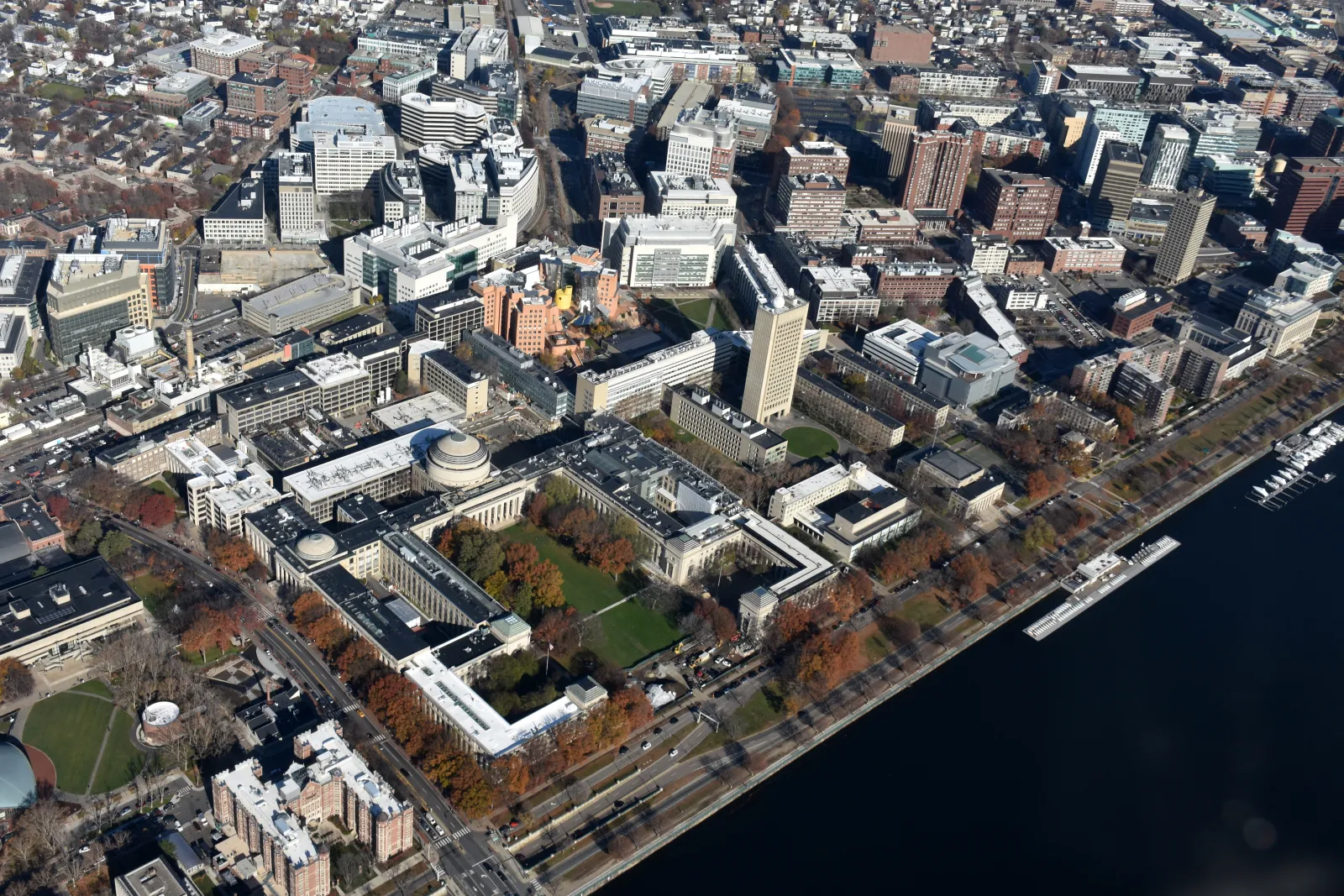
The Massachusetts Institute of Technology is a private research university founded in 1861 in Cambridge, Massachusetts, on the north bank of the Charles River across from Boston. Built originally to train engineers and scientists for the industrializing United States, MIT today spans five schools and the Schwarzman College of Computing, with particular strength in engineering, computer science, physical sciences, economics, and management through the Sloan School of Management. Its motto, 'mens et manus' (mind and hand), reflects a teaching philosophy that pairs rigorous theory with hands-on labs, UROP research placements, and design projects from the first year onward. MIT is consistently ranked among the top one or two universities in the world, and it draws one of the most international student bodies in American higher education, with undergraduates and graduate students arriving from well over 130 countries. Admission is need-blind and, unusually for a private US university, the same need-blind, full-need financial aid policy extends to international undergraduates as well as domestic ones, making MIT one of a very small number of American institutions where an international applicant's ability to pay has no bearing on the admissions decision. For prospective IELTS or TOEFL test-takers, MIT is a useful benchmark case: it does not mandate an English test score for undergraduate applicants (though it strongly recommends one for non-native speakers with less than five years of English-medium education), while its graduate programs, administered through the Office of Graduate Education and individual departments, generally do require TOEFL, IELTS, or the Duolingo English Test unless the applicant qualifies for an exemption.
Rankings
US News National Universities
#2 (2026)
QS World University Rankings by Subject · Computer Science and Information Systems
#1 (2026)
QS World University Rankings by Subject · Engineering and Technology
#1 (2026)
US News Best Graduate Schools · Best Graduate Engineering Programs
#1 (2026)
US News Best Graduate Schools · Best Business Schools (MIT Sloan MBA)
#6 (2026)
Admissions, Requirements & Costs
Requirements, deadlines, and test-score cutoffs differ significantly between undergraduate and graduate/Master's programs — shown separately below.
Undergraduate
Acceptance Rate
4.6%
Application Fee
$75
Documents required: Common Application or Coalition Application, MIT-specific Short Answer Questions and Essays, Secondary School Transcript, SAT or ACT Scores, Two Letters of Recommendation (from math/science and humanities/language/social science teachers), School Report and Counselor Recommendation, English Proficiency Test Scores (recommended for non-native speakers, not mandatory), Application Fee or Fee Waiver
| Term | Deadline | Type |
|---|---|---|
| Fall | November 1 | Early Action |
| Fall | January 5 | Regular Decision |
Test Scores
SAT Range
1520–1580
ACT Range
34–36
IELTS Minimum
7 (Gabble rec. 7.5)
TOEFL Minimum
90 (4.5 new scale) · Gabble rec. 100 (5 new scale)
PTE Minimum
65
TOEFL scores shown as: legacy 0–120 scale (new 1.0–6.0 CEFR-aligned scale, effective Jan 2026).
Accepted tests: IELTS, TOEFL, PTE, Duolingo, Cambridge English
Waiver: MIT does not require an English proficiency score at all for undergraduate admission; it is only 'strongly recommended' for applicants who have used English for fewer than 5 years or do not speak it at home or at school, and any submitted score is evaluated in context alongside the rest of the application rather than against a hard cutoff. The minimum/recommended figures above are the thresholds MIT Admissions itself publishes for applicants who choose to submit a score.
Tuition (Intl.)
$66,720
Tuition (Domestic)
$66,720
Living Expenses/yr
$25,620
Total Cost of Attendance
$92,760
Scholarships
MIT Scholarship
Varies by demonstrated need; average award approximately $63,000/year for recipients
MIT's core need-based grant, funded by the Institute, that closes the gap between a family's calculated ability to pay and the full cost of attendance. MIT does not award merit, athletic, or academic scholarships of any kind.
Eligibility: Demonstrated financial need as assessed through required financial aid documentation; available to admitted students regardless of citizenship
MIT Tuition-Free / Reduced-Contribution Aid Initiative
Up to full cost of attendance
Starting with the 2025-2026 academic year, MIT covers tuition in full for students from families with typical assets and total annual income under $200,000, and expects no parental contribution at all (covering tuition, housing, dining, and fees) for families with income under $100,000.
Eligibility: Family income and asset thresholds as assessed via CSS Profile / MIT's own aid application; applies to domestic and international admitted undergraduates alike
Popular Programs
Gabble Prep Insights
Where applicants lose points: Speaking tends to be the section where strong STEM-track applicants underperform relative to their reading/listening scores, since technical high-school curricula abroad rarely train extended spontaneous speech on abstract or opinion-based prompts.
We commonly see applicants with near-perfect Reading and Listening scores but a Writing or Speaking band that lags by a full point or more, largely because STEM-heavy applicants practice comprehension far more than production. Since MIT does not set a hard English-score cutoff for undergrads, this gap matters less here than for MIT's graduate programs, where departmental minimums are enforced strictly.
Because MIT does not require a TOEFL/IELTS score at all for undergraduate applicants, many applicants skip test prep entirely and instead let the interview and essays demonstrate fluency. The SAT/ACT, by contrast, is mandatory again for all first-year applicants (domestic and international alike), so test-prep effort is generally better spent there than on an optional English score.
Recommended prep timeline: 8 weeks
Graduate (Master's & PhD)
Acceptance Rate
9%
Application Fee
$90
Documents required: Online Application (GradApply/GradSlate, or SloanSlate for MIT Sloan programs), Unofficial Transcripts from All Institutions Attended, Three Letters of Recommendation (most departments), Statement of Objectives / Personal Statement, Updated CV or Resume, GRE or GMAT Scores (required by some departments/programs only, not university-wide), English Proficiency Test Scores (required for most international applicants), Application Fee or Fee Waiver
| Term | Deadline | Type |
|---|---|---|
| Fall | Early December (varies by department; e.g., EECS deadline is December 1) | Regular Decision |
| Fall | September 29 (MIT Sloan MBA Round 1) | Priority |
| Fall | January 12 (MIT Sloan MBA Round 2) | Regular Decision |
Test Scores
GMAT Range
710–760
IELTS Minimum
7
TOEFL Minimum
100 (5 new scale)
TOEFL scores shown as: legacy 0–120 scale (new 1.0–6.0 CEFR-aligned scale, effective Jan 2026).
Accepted tests: IELTS, TOEFL, Duolingo, Cambridge English
Waiver: The Office of Graduate Education (OGE) sets IELTS 7.0, TOEFL iBT 100, Duolingo 135, and Cambridge 190 as its recommended minimum floor for nearly all international applicants, but explicitly states that 'department minimum score requirements supersede GradAdmissions recommended minimum scores' — individual departments can and do set higher thresholds. PTE Academic is not listed as an accepted test for graduate admissions (unlike undergraduate, where it is accepted). Applicants are typically exempted if their undergraduate degree of at least 3-4 years was earned at an English-medium institution in a country such as the US, UK, Canada, Australia, Ireland, or New Zealand within the last 5 years, or if English is their first/native language; departments may also grant discretionary waivers based on demonstrated fluency.
Tuition (Intl.)
$66,720
Tuition (Domestic)
$66,720
Living Expenses/yr
$42,297
Total Cost of Attendance
$109,017
Scholarships
MIT Presidential Graduate Fellowship
Full tuition + 9-month stipend + health insurance (first year)
A prestigious, nomination-only fellowship (students cannot apply directly) used by departments across all five schools to recruit top incoming graduate students. Funds full tuition, a nine-month stipend at the approved doctoral RA rate, and the student health insurance plan for the first academic year.
Eligibility: Nominated by department/program administrators; open to incoming graduate students of any citizenship
PhD Guaranteed Funding (Fellowship / RA / TA)
Full tuition + 12-month stipend (doctoral rate roughly $51,226/year as of June 2025) + health insurance
MIT's standard doctoral funding model: essentially all admitted PhD students receive full tuition, a stipend, and health insurance for the duration of normative time to degree. Years 1-2 are typically covered by fellowship funding; years 3-6 by research or teaching assistantships.
Eligibility: All admitted PhD students regardless of citizenship; not typically extended to standalone Master's students
MIT Sloan Fellowships & Need-Based Aid
Varies by program and need
Need-based and merit fellowships awarded by Sloan to admitted MBA, MFin, and MBAn students to offset tuition; unlike PhD funding this does not cover full cost of attendance for most recipients, and many Master's students supplement with loans.
Eligibility: Admitted students in MIT Sloan degree programs, domestic and international alike
Popular Programs
Gabble Prep Insights
Where applicants lose points: Speaking and Writing remain the weakest sections for many international applicants, but at the graduate level the bigger risk is assuming the OGE's university-wide recommended floor (TOEFL 100 / IELTS 7.0) is sufficient when the target department publishes a stricter minimum.
Because roughly 45% of MIT's graduate student body is international, English thresholds are enforced far more strictly than at the undergraduate level, where no test is required at all. Applicants also underestimate how much GRE/GMAT policy varies by program: EECS does not use GRE scores at all, while departments like EAPS require the GRE General Test, and MIT Sloan's MBA/MFin/MBAn programs expect a competitive GMAT (Class of 2027 10th-edition median around 720) or an equivalent GRE.
Graduate applicants should check their specific department's admissions page (not just the general OGE guideline) before assuming a TOEFL 100 or IELTS 7.0 is enough, since department minimums override the institute-wide recommendation and PTE is not accepted at the graduate level at all. On cost, PhD applicants should note that MIT's sticker tuition/COA figures are largely moot for them in practice: virtually all admitted PhD students are funded via fellowship, RA, or TA positions covering tuition, stipend, and insurance, whereas most standalone Master's students (MEng, SM, Sloan MBA/MFin/MBAn) pay standard tuition and should budget accordingly or seek external funding.
Recommended prep timeline: 10 weeks
Programs Offered
Computer Science and Engineering (Course 6-3)
Undergraduate · 4 yr · $66,720/yr
Electrical Engineering and Computer Science (Course 6-2)
Undergraduate · 4 yr · $66,720/yr
Mechanical Engineering (Course 2)
Undergraduate · 4 yr · $66,720/yr
Physics (Course 8)
Undergraduate · 4 yr · $66,720/yr
Mathematics (Course 18)
Undergraduate · 4 yr · $66,720/yr
Biological Engineering (Course 20)
Undergraduate · 4 yr · $66,720/yr
Master of Business Administration (MBA)
Masters · 2 yr · $89,000/yr
Master of Engineering in EECS
Masters · 1 yr · $64,310/yr
PhD in Electrical Engineering and Computer Science
PhD · 5 yr
Campus Life
Roughly 92% of MIT undergraduates live in Institute-affiliated housing, and each of the campus's dormitories and independent living groups has a distinct culture, from maker-space-heavy halls to quieter residences, with traditions like the annual water fight or the Baker House piano drop. Beyond the classroom, students can choose from more than 500 registered student organizations spanning robotics, entrepreneurship, the arts, and cultural groups, alongside 33 NCAA Division III varsity teams and dozens of club and intramural sports that together involve a large share of the student body. The Cambridge campus sits directly across the Charles River from Boston, giving students easy access to a second major city's internship, research, and cultural opportunities.
Notable clubs: MIT Robotics Team, MIT Sloan Investment Management Club, MIT Muses (a cappella), MIT Sailing, MIT Model United Nations, HackMIT organizing committee
Outcomes
Undergraduate
Graduation Rate
96%
Employed within 6mo
92%
Avg. Starting Salary
$118,100
Graduate
Avg. Starting Salary
$173,132
Notable Alumni
Kofi Annan — Former UN Secretary-General and Nobel Peace Prize laureate
Buzz Aldrin — Apollo 11 astronaut, second person to walk on the Moon
Richard Feynman — Nobel Prize-winning theoretical physicist
Kwame Nkrumah — First President of Ghana
Salman Khan — Founder of Khan Academy
Visa Interview Prep
MIT's International Students Office (ISO) issues the I-20 and runs pre-departure and visa-interview preparation sessions for admitted students; because MIT's total cost of attendance is high, officers commonly probe funding sources closely, so applicants should be ready to walk through their financial documentation (family funds, MIT aid award letter, sponsor affidavits, or PhD funding letter) without hesitation.
- Ability to clearly explain choice of MIT and specific program/department
- Financial sufficiency and clarity on funding source (especially given MIT's high sticker cost of attendance)
- Ties to home country and credible post-graduation plans
- Consistency between SEVIS Form I-20 details and visa application answers
FAQs
Do I need to submit IELTS or TOEFL scores to apply to MIT as an undergraduate?Undergrad
No. MIT does not require an English proficiency test score from undergraduate applicants. It is only strongly recommended if you have used English for fewer than five years or do not use it at home or in school, and MIT reviews any score you do submit in context rather than against a strict cutoff.
What IELTS or TOEFL score should I aim for if applying to an MIT graduate program?Grad
The university-wide recommended floor set by the Office of Graduate Education is TOEFL iBT 100, IELTS 7.0, or Duolingo 135, but individual departments can and do set higher minimums, and those department-specific numbers override the general guideline, so check your target department's page directly. Note that PTE Academic, though accepted for undergraduate applicants, is not accepted for MIT graduate admissions.
Is the SAT or ACT mandatory for international applicants?Undergrad
Yes. MIT reinstated its standardized testing requirement for all first-year applicants, domestic and international alike, so a valid SAT or ACT score is required regardless of citizenship.
Can international students get financial aid at MIT?Undergrad
Yes, and this is unusual among US universities: MIT's undergraduate admissions are need-blind and its need-based aid program is full-need for international undergraduates on the same terms as domestic students, with no separate, smaller pool reserved for international applicants.
How competitive is MIT admission for international applicants specifically?Undergrad
Very. In the most recent cycle roughly 6,900 international students applied for about 136 undergraduate offers, an acceptance rate near 2%, well below the overall institute-wide undergraduate rate of about 4.6%, so international applicants should treat MIT as a true reach school.
Does MIT offer conditional admission for students who haven't yet met the English requirement?
No. Neither MIT's undergraduate nor graduate programs offer a conditional or bridge-program admission pathway tied to English scores; the decision is final at the point of admission and there is no pathway program to build up language proficiency afterward.
How long is an IELTS or TOEFL score valid for an MIT application?
MIT generally treats English test scores as valid for about two years, consistent with the testing organizations' own validity windows, so scores from earlier in your studies should still be usable when you apply, whether for undergraduate or graduate admission.
Is MIT's application fee waived for applicants who can't afford it?
Yes. The $75 undergraduate application fee (and the $90 standard graduate fee, or $95-250 for MIT Sloan programs) can be waived for domestic and international applicants who demonstrate financial hardship, and requesting a waiver does not affect the admissions decision since undergraduate review is need-blind.
Does MIT require the GRE or GMAT for graduate/Master's applicants?Grad
It depends entirely on the department: there is no university-wide GRE requirement. MIT EECS, for example, does not use GRE scores at all in admissions, while some departments such as EAPS do require the GRE General Test. MIT Sloan's MBA, MFin, and MBAn programs expect a GMAT or GRE score; the MBA Class of 2027's median GMAT (10th edition) was around 720. Always confirm the policy on your specific program's page rather than assuming.
Are MIT PhD students expected to pay tuition out of pocket?Grad
No, in practice. Essentially all admitted PhD students receive guaranteed funding covering full tuition, a stipend, and health insurance for the normative time to degree, typically through a fellowship in years one and two and a research or teaching assistantship in years three through six. The 2025-26 doctoral stipend rate is roughly $51,226 for a 12-month appointment. This funding guarantee generally does not extend to standalone Master's students.
How much does a Master's degree at MIT cost if I'm not fully funded?Grad
Standard MIT graduate tuition is about $66,720 per year, and MIT's published graduate cost of attendance (tuition, housing, food, insurance, and other expenses) for a 9-month academic year is approximately $109,017. Master's students in programs like MEng, SM, or MIT Sloan's MBA/MFin/MBAn are generally expected to self-fund through savings, loans, or partial fellowships, unlike PhD students who are guaranteed full funding.